


When someone’s heart stops, CPR (cardiopulmonary resuscitation) becomes a race against time. In these critical moments, survival depends not only on medical knowledge but also on how effectively the resuscitation team works together. Effective team dynamics in CPR involve clear communication, strong leadership, defined responsibilities, mutual support, and coordinated action that allow responders to deliver fast, organized, and high-quality care under pressure.
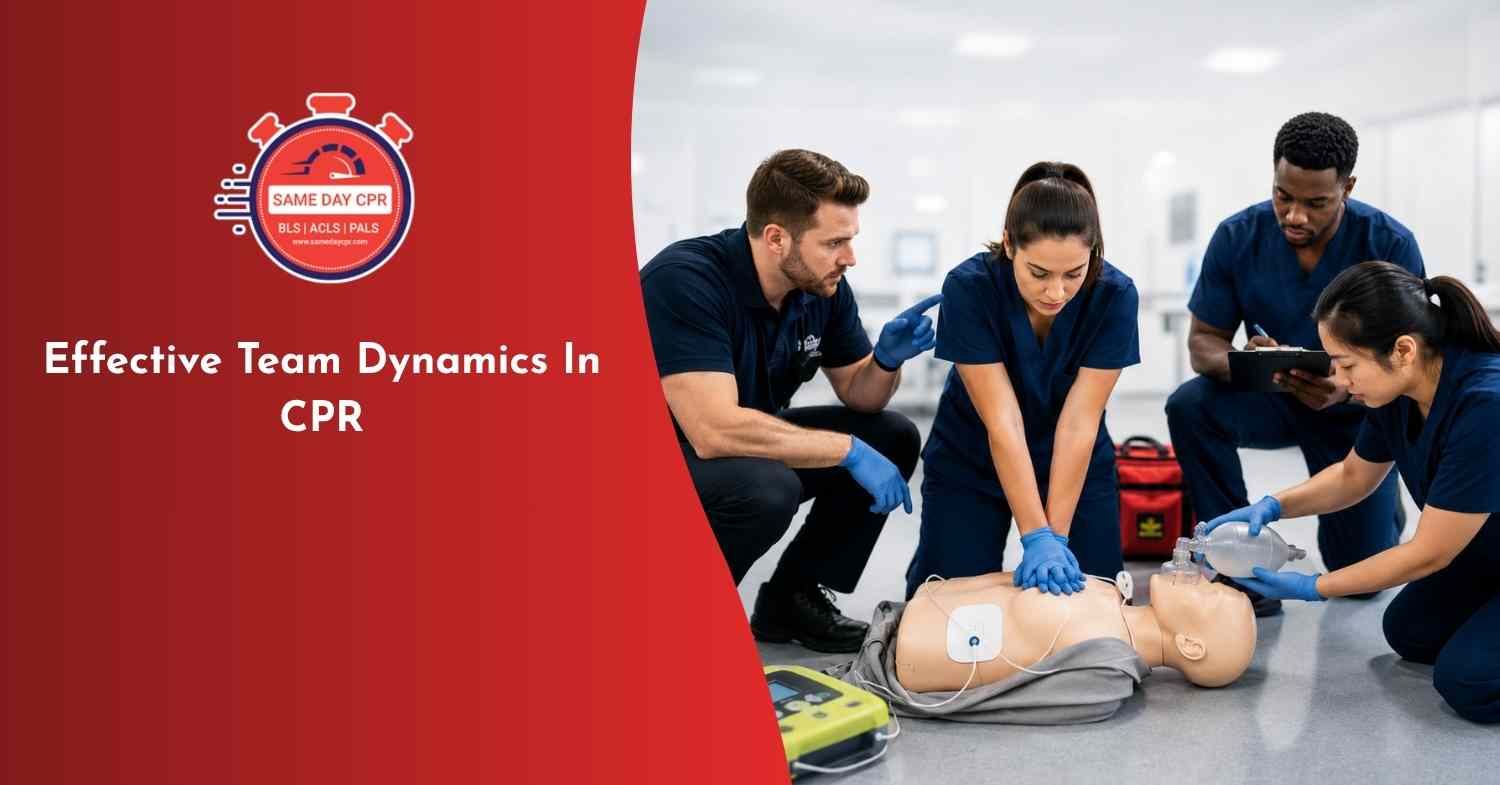
During a CPR emergency, several tasks must happen at the same time. One team member performs chest compressions, another manages the airway, someone prepares the defibrillator, while another administers medications and records events. Without teamwork and coordination, even highly trained responders can become disorganized, causing delays, interruptions, and preventable mistakes. Strong team dynamics help ensure that every action is timely, efficient, and focused on improving the patient’s chances of survival.
This article explains the importance of CPR team dynamics, the essential roles within a resuscitation team, the core elements of effective collaboration, common challenges teams face, and strategies that improve overall performance during emergencies.
What Does Team Dynamics Mean in CPR?
Team dynamics in CPR refer to the way multiple responders communicate, coordinate tasks, support one another, and function as a unified team during resuscitation. Effective team dynamics ensure that all members work toward the same goal while maintaining organized and uninterrupted patient care.
In a cardiac emergency, responders must make rapid decisions and perform multiple interventions simultaneously. Clear leadership, role clarity, situational awareness, and closed-loop communication help reduce confusion and ensure that no critical task is overlooked. When a CPR team functions efficiently, members anticipate needs, adapt quickly to changing conditions, and maintain continuous, high-quality resuscitation efforts.
Why Are Effective Team Dynamics Important During CPR?
Effective team dynamics are essential during CPR because they improve coordination, minimize delays, and help teams provide consistent patient care under extreme pressure.
Reduces Mistakes and Miscommunication
Clear communication allows team members to understand instructions quickly and accurately. Closed-loop communication ensures that important messages are heard, confirmed, and completed properly. This reduces medication errors, missed interventions, and unnecessary interruptions during CPR.
Maintains Continuous High-Quality CPR
Strong coordination helps prevent unnecessary pauses in chest compressions. Team members know when to rotate roles, prepare equipment, and perform interventions without disrupting patient care. Continuous compressions are critical because even brief interruptions can significantly reduce survival chances.
Improves Team Coordination Under Pressure
Medical emergencies are stressful and fast-moving. Effective team dynamics create structure and stability, allowing responders to stay calm, focused, and organized. Teams that communicate effectively are better able to make quick decisions and adapt to rapidly changing situations.
Supports Faster Decision-Making
A well-led CPR team can prioritize tasks efficiently and respond immediately to the patient’s condition. Shared understanding between team members reduces hesitation and helps critical interventions happen without delay.
Increases Survival Outcomes
Research consistently shows that coordinated resuscitation teams achieve better patient outcomes than disorganized teams. Efficient teamwork helps eliminate wasted time, improves CPR quality, and increases the likelihood of successful resuscitation.
Core Components of Effective CPR Team Dynamics
Several key elements contribute to effective CPR team performance.
Clear Leadership
An effective CPR team requires a designated leader who coordinates actions, assigns responsibilities, and monitors overall performance. The leader maintains situational awareness, gives clear instructions, and ensures that all interventions happen in the correct sequence.
Strong leadership reduces confusion and keeps the entire team aligned during high-pressure situations.
Defined Roles and Responsibilities
Each team member must understand their specific responsibilities before and during resuscitation. Clearly assigned roles help avoid duplicated efforts or missed tasks.
Common responsibilities include:
- Chest Compressions
- Airway Management
- Medication Administration
- Rhythm Analysis
- Documentation
- IV/IO Access
Role clarity allows the team to work efficiently while maintaining continuous patient care.
Closed-Loop Communication
Closed-loop communication is one of the most important components of CPR team dynamics. In this communication style, instructions are repeated back to confirm understanding.
For example:
- Leader: “Administer 1 milligram of epinephrine.”
- Team member: “1 milligram of epinephrine administered.”
This communication method minimizes misunderstandings and confirms task completion in real time.
Situational Awareness
Situational awareness means understanding what is happening during the entire resuscitation process. Team members remain aware of patient status, timing, equipment readiness, and the actions of other responders.
Strong situational awareness helps teams identify problems early and respond quickly to changing conditions.
Mutual Trust and Respect
Effective CPR teams rely on trust and professional respect between members. Team members must feel comfortable speaking up, sharing concerns, and supporting one another during emergencies.
A respectful team environment improves communication, encourages collaboration, and reduces stress under pressure.
Continuous Feedback and Debriefing
After resuscitation events, teams should review performance together. Debriefing allows responders to discuss strengths, identify weaknesses, and improve future teamwork.
Constructive feedback strengthens communication, coordination, and overall team performance over time.
What Are the Key Roles in an Effective CPR Team?
Each member of a CPR team contributes to the success of the resuscitation effort.
Team Leader
The team leader directs the entire resuscitation process. This person assigns tasks, monitors performance, makes treatment decisions, and ensures effective coordination between team members.
Chest Compressor
The chest compressor delivers compressions at the correct depth and rate to maintain blood circulation. Team members rotate this role regularly to prevent fatigue and maintain CPR quality.
Airway Manager
The airway manager maintains an open airway and provides ventilation support. This role helps ensure adequate oxygen delivery throughout resuscitation.
Defibrillator Operator
This responder operates the defibrillator, analyzes heart rhythms, and delivers shocks when appropriate while coordinating safely with the rest of the team.
IV/IO Access Provider
The IV/IO provider establishes vascular access so medications and fluids can be administered quickly during the emergency.
Medication Administrator
This team member prepares and administers medications according to the team leader’s instructions while monitoring timing and dosage accuracy.
Recorder / Timekeeper
The recorder documents medications, shocks, CPR cycles, and major interventions. Accurate tracking helps maintain organization and supports clinical decision-making during resuscitation.
Strategies to Improve CPR Team Performance
CPR team performance improves when teams regularly practice communication, coordination, and leadership skills together.
Assign Leadership Immediately
A team functions best when leadership is established early. Immediate leadership helps organize tasks quickly and prevents confusion during the first moments of resuscitation.
Practice Regular Team Training
Teams that train together develop stronger coordination and familiarity with each other’s working styles. Repeated practice builds confidence, improves communication, and helps team members respond automatically during real emergencies.
Use Standardized Protocols
Standardized CPR protocols help ensure consistency in patient care. When all team members follow the same structured process, tasks become more organized and predictable.
Encourage Open Communication
All team members should feel comfortable sharing observations or concerns during resuscitation. Open communication improves situational awareness and helps teams recognize problems before they escalate.
Conduct Post-Event Debriefings
Reviewing team performance after emergencies helps identify opportunities for improvement. Debriefings strengthen future communication, leadership, and teamwork skills.
What Are Examples of Effective Team Dynamics in CPR?
Good team dynamics help CPR teams work quickly and stay focused during emergencies. When each person communicates clearly and supports one another, patient care becomes safer and more effective.
Example 1: Strong Leadership During Cardiac Arrest
A patient suddenly collapses in the emergency department. One responder immediately assumes leadership, assigns roles, and coordinates interventions. Because responsibilities are clearly delegated, the team begins organized CPR within seconds.
Example 2: Smooth Compressor Rotation
After two minutes of chest compressions, another team member smoothly takes over compressions without interrupting patient care. This seamless transition helps maintain consistent blood circulation.
Example 3: Closed-Loop Communication
Before defibrillation, the operator announces that the defibrillator is charging. The leader instructs the team to clear the patient, and every member verbally confirms they are clear before shock delivery. This communication prevents errors and improves safety.
Example 4: Coordinated Airway and Compression Management
The airway manager and chest compressor coordinate their timing carefully to minimize pauses in compressions during ventilation. This teamwork improves oxygen delivery while maintaining CPR quality.
Example 5: Effective Timekeeping
The timekeeper announces compressor rotations, medication timing, and CPR intervals. These reminders help the team stay organized and ensure that critical interventions occur on schedule.
Common Challenges in CPR Team Dynamics
CPR teams face several challenges that can disrupt coordination and affect how well they work together during emergencies. Understanding these obstacles helps teams recognize problems early and respond more effectively when every moment is crucial.
- Lack of Clear Leadership: Without an identified leader, teams may hesitate or duplicate tasks. Delayed decision-making can reduce CPR effectiveness and create confusion.
- Poor Communication: Noisy environments, overlapping conversations, or unclear instructions can lead to misunderstandings and missed interventions.
- Role Confusion: When responsibilities are not clearly assigned, important tasks may be delayed or overlooked entirely.
- Stress and Panic: High-stress emergencies can overwhelm responders and negatively affect decision-making, coordination, and communication.
- Uneven Experience Levels: Differences in training and confidence levels may slow team performance and place additional pressure on experienced responders.
The Vital Role of Team Dynamics in Successful CPR Resuscitation
In summary, effective team dynamics in CPR are essential for delivering fast, organized, and high-quality resuscitation care. Clear leadership, defined roles, strong communication, situational awareness, and mutual trust allow responders to function as a coordinated unit during life-threatening emergencies.
Teams that regularly train together, practice closed-loop communication, and review their performance after resuscitation events are better prepared to handle real cardiac emergencies. By strengthening teamwork and collaboration, CPR teams can reduce errors, improve efficiency, and significantly increase a patient’s chances of survival.